Wondering what to wear in Morocco? It is one of the most common questions we get from travelers before they arrive in Marrakech. The good news is that there is no strict legal dress code for visitors, and you will see everything from jeans to designer kaftans in the city. Still, dressing with a little care helps you blend in, feel comfortable in the heat, and show respect in a mostly conservative, Muslim-majority country.
This guide comes from our local team, who spend every day guiding visitors through medinas, deserts and mountain villages. We cover the Morocco dress code by place and season, tips for women and men, and a full table of what to pack for Morocco.
In Morocco, wear loose, breathable clothing that covers your shoulders and knees, especially in medinas, rural villages and religious sites. Women are most comfortable in long skirts or trousers with a light scarf; men should avoid going shirtless and very short shorts outside beaches and pools. Pack layers year-round, since desert nights and mountain mornings can be cold even when afternoons are hot.
Key takeaways
- Cover shoulders and knees in medinas, villages and religious sites; it is respectful and practical.
- Loose, breathable fabrics like cotton and linen work best in the heat.
- Desert and mountain trips need warm layers: nights can drop close to freezing in winter.
- A light scarf is the most useful item for women (sun, dust, and covering hair if needed).
- Comfortable closed shoes are essential for cobbled medina lanes.
Is There a Dress Code in Morocco?
There is no official dress code for tourists in Morocco. Nobody will fine you for wearing shorts. However, Morocco is a Muslim country with conservative values, especially outside the big cities, and modest dress is the social norm.
Dressing modestly is about respect and comfort. You will attract less unwanted attention, feel more at ease in traditional neighborhoods, and stay protected from strong sun. In cosmopolitan areas such as Gueliz in Marrakech or the Casablanca corniche, styles are more relaxed and Western.
What to Wear in Marrakech and the Medinas
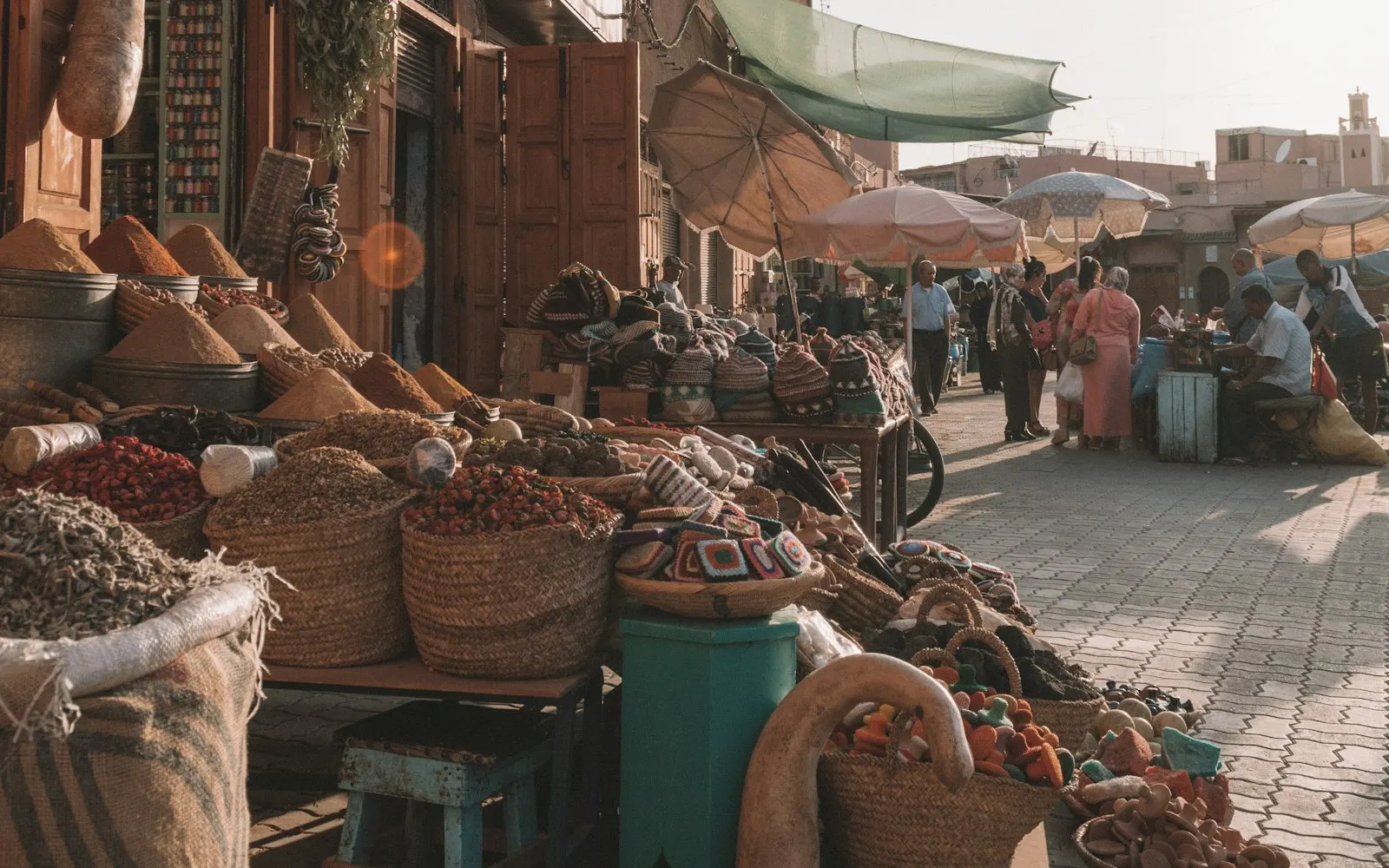
Marrakech's medina is busy, hot and dusty, with narrow lanes, motorbikes and plenty of walking. Practical, modest clothing works best.
- Tops: T-shirts or loose blouses that cover shoulders; avoid low necklines.
- Bottoms: Long skirts, maxi dresses, wide-leg or linen trousers, or knee-length shorts for men.
- Shoes: Closed sneakers or sturdy sandals. Cobbles can be uneven and lanes are sometimes wet.
- Extras: Sunglasses, a hat and a crossbody bag that zips closed.
On our Marrakech medina walking tour, our guides suggest comfortable shoes above all, since you can easily walk 5 to 8 km in a morning. The medinas of Fes and Chefchaouen call for the same approach. For more city advice, read our first-time Marrakech travel tips.
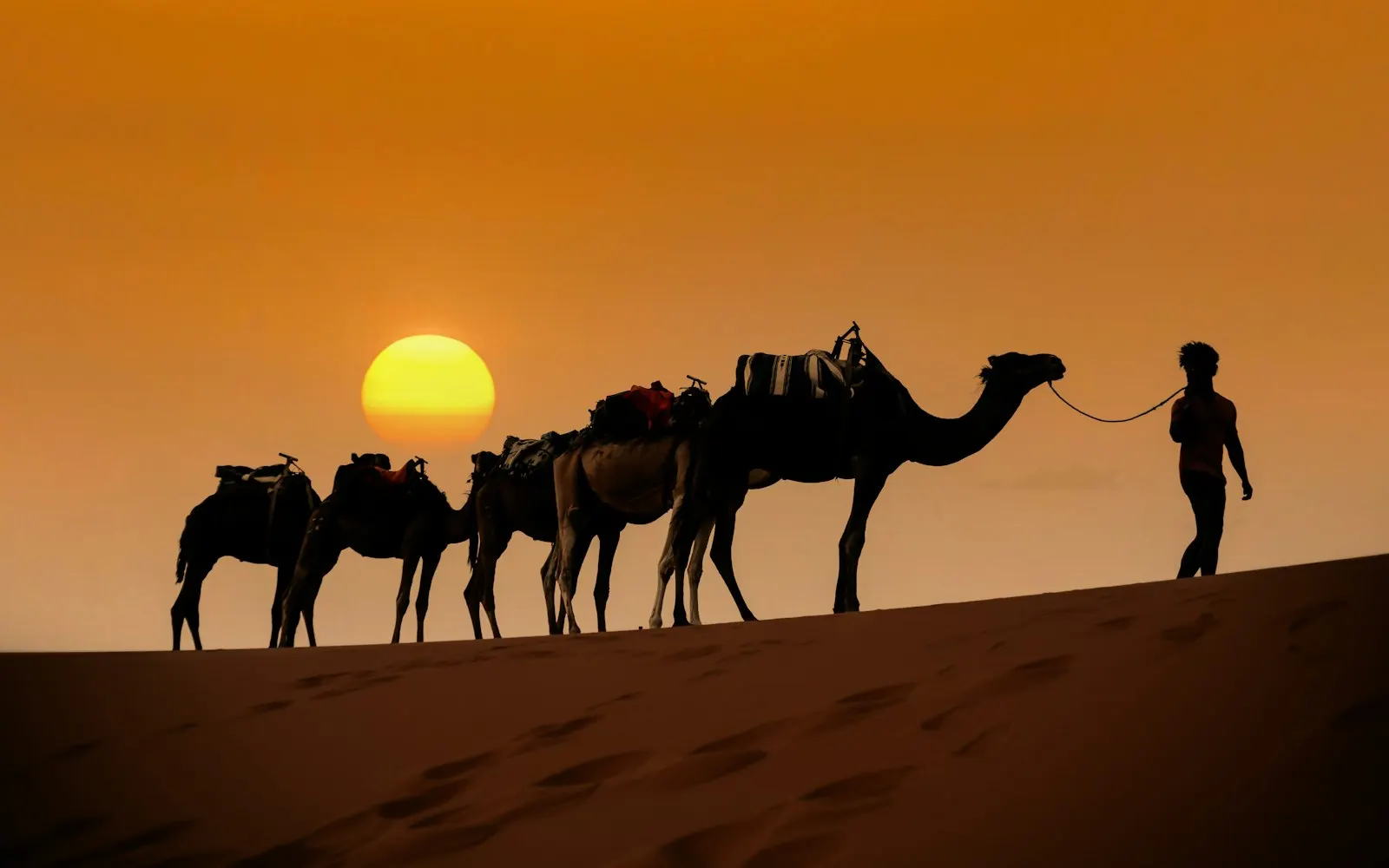
What to Wear in the Sahara Desert
The desert is a place of extremes. Daytime sun is fierce, but temperatures fall fast after sunset. In winter, nights in Merzouga or Zagora can drop to around 0°C.
- Daytime: Loose long sleeves and long trousers to protect from sun and sand.
- Evening: A fleece or warm jacket, especially from November to March.
- Head: A scarf or cheche (desert turban) to protect against sun and wind. You can buy one locally for a small price.
- Feet: Sandals or light shoes for the dunes, socks for cold evenings.
- Eyes: Sunglasses for glare and blowing sand.
Heading on our 3-day Sahara desert tour to Merzouga? Pack a small overnight bag for the camp so you do not carry your full suitcase onto the camel. Our Marrakech to Merzouga guide explains the route in detail.
What to Wear in the Atlas Mountains
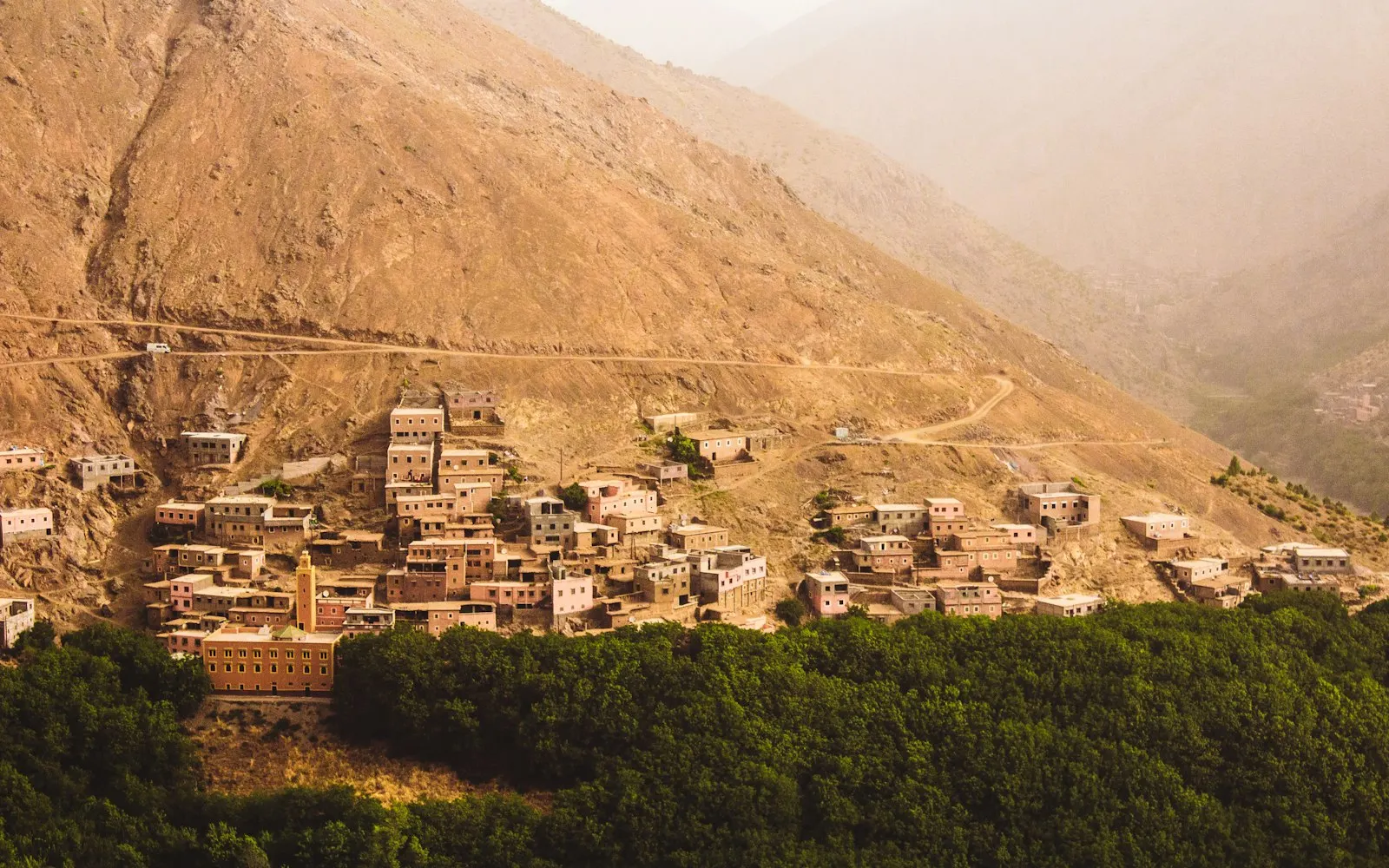
The High Atlas is cooler than Marrakech at every time of year. Imlil sits at about 1,740 m, and temperatures there can be 10°C lower than in the city.
- Layers: Base layer, fleece and windproof jacket.
- Shoes: Hiking shoes or boots with grip for rocky paths.
- Rain: A packable rain jacket in spring and autumn.
- Village visits: Cover shoulders and knees out of respect; rural Berber communities are conservative.
If you plan a big summit, our guide to climbing Mount Toubkal has a complete trekking kit list. For a gentler outing, the Imlil and Three Valleys day trip needs only sturdy shoes and a warm layer.
What to Wear When Visiting Mosques and Religious Sites
Most mosques in Morocco are closed to non-Muslims. The major exception is the Hassan II Mosque in Casablanca, which offers guided tours for visitors.
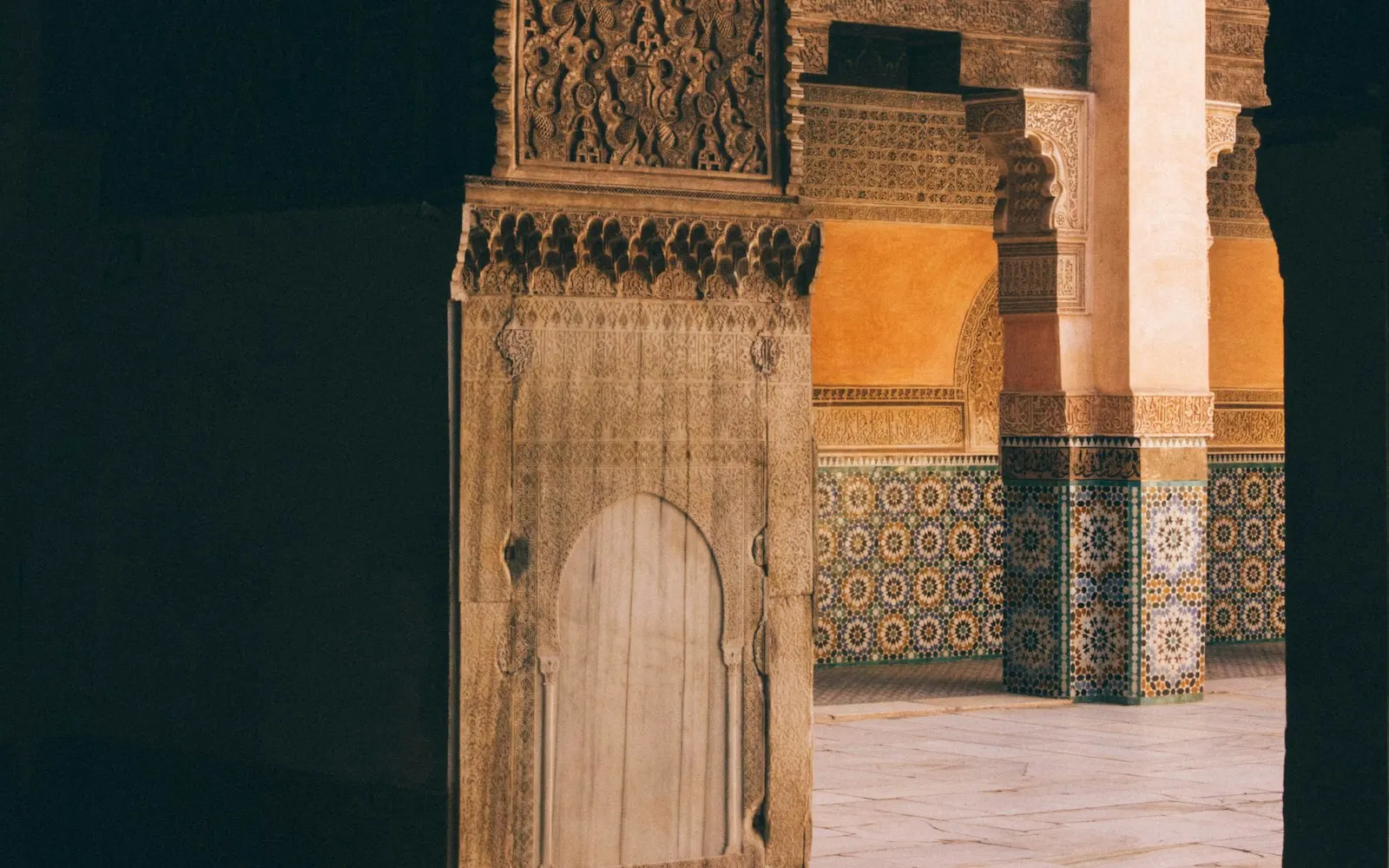
For Hassan II Mosque and other religious sites such as the Ben Youssef area, shrines and zaouias:
- Women: Cover shoulders, arms and legs; bring a scarf to cover hair inside the mosque.
- Men: Long trousers and shirts with sleeves.
- Shoes: You will remove them inside, so wear easy slip-ons and clean socks.
Morocco Dress Code for Women
Women travelers often ask whether they need to cover their hair. You do not; most Moroccan women in cities do not cover their faces, and many do not wear headscarves. Even so, a few tips make the trip more comfortable.
- Cover shoulders and knees in medinas and the countryside.
- Go loose rather than tight. Flowing maxi dresses, harem pants and linen trousers are ideal.
- Carry a scarf. It is useful for sun, dust, covering a sleeveless top, or entering religious sites.
- Swimwear: Bikinis are fine at hotel pools, riad plunge pools and tourist beaches like Essaouira and Agadir. Cover up when leaving the beach.
- Hammams: Bring underwear or swimwear for public hammams; spas provide disposable underwear.
Modest dress does not stop all unwanted comments in busy areas, but it does reduce them. Confident walking and a polite "no, thank you" help as well.
Morocco Dress Code for Men
Men have it a little easier, but a few norms still apply.
- Avoid going shirtless anywhere except beaches and pools.
- Shorts: Knee-length shorts are fine in cities and tourist areas; trousers are better in villages and religious sites.
- Tank tops: Acceptable at the pool, less so in the medina.
- Smart casual: Collared shirts or neat T-shirts are good for nicer restaurants and riads.
What to Wear in Morocco by Season
| Season | Marrakech day temps (approx.) | What to wear |
|---|---|---|
| Spring (Mar to May) | 20 to 30°C | Light layers, light jacket for evenings |
| Summer (Jun to Aug) | 33 to 40°C+ | Loose linen and cotton, hat, sun-protective long sleeves |
| Autumn (Sep to Nov) | 22 to 32°C | Light clothing, a sweater for evenings and desert nights |
| Winter (Dec to Feb) | 16 to 20°C, cold nights | Warm layers, jacket, closed shoes; heavy coat for desert and mountains |
Temperatures vary year to year, so check the forecast before you pack. Our best time to visit Marrakech guide breaks down the weather month by month.
What to Pack for Morocco: Complete Packing List
| Category | Essentials | Notes |
|---|---|---|
| Tops | 3 to 5 breathable T-shirts or blouses, 1 to 2 long-sleeve shirts | Cover shoulders |
| Bottoms | 2 to 3 pairs of loose trousers or long skirts | Linen or cotton |
| Layers | Fleece or sweater, light waterproof jacket | Warm coat in winter |
| Footwear | Walking shoes, sandals, slip-ons for mosques and riads | Broken-in |
| Accessories | Scarf, sun hat, sunglasses | Scarf is multi-use |
| Swimwear | Swimsuit, cover-up | For pools, beaches, hammams |
| Toiletries | Sunscreen, lip balm, hand sanitizer, tissues | Not every toilet has paper |
| Health | Basic medicines, rehydration salts, plasters | Stomach remedies helpful |
| Tech | Universal adapter (Type C/E plugs), power bank | 220 V supply |
| Documents | Passport, travel insurance, printed bookings | Copies stored separately |
What not to bring
- Expensive jewelry that draws attention.
- Very short shorts, crop tops or see-through clothing if you plan to explore medinas and villages.
- Too many clothes: laundry service is cheap in most riads, and the souks sell scarves and light clothing.
Shopping for Clothes in Morocco
Many visitors buy part of their wardrobe in the souks. Light cotton djellabas, kaftans, scarves, babouche slippers and leather sandals are widely available. Prices are negotiable; our Marrakech souks shopping guide explains how to haggle politely.
Conclusion
Knowing what to wear in Morocco makes your trip more comfortable and respectful. Think loose, breathable and modest in towns and villages, warm layers for the desert and mountains, and a scarf for almost everything. With the right packing list, you can move easily from the medina to the dunes in a single trip.
If you have questions about what to bring for a specific tour, our team is happy to help. Message us on WhatsApp to plan or book; you pay on the day, and cancellation is free.