Marrakech Guide · 3 min read
Marrakech Souks Shopping Guide 2026: What to Buy, Prices and Haggling
Quick answer
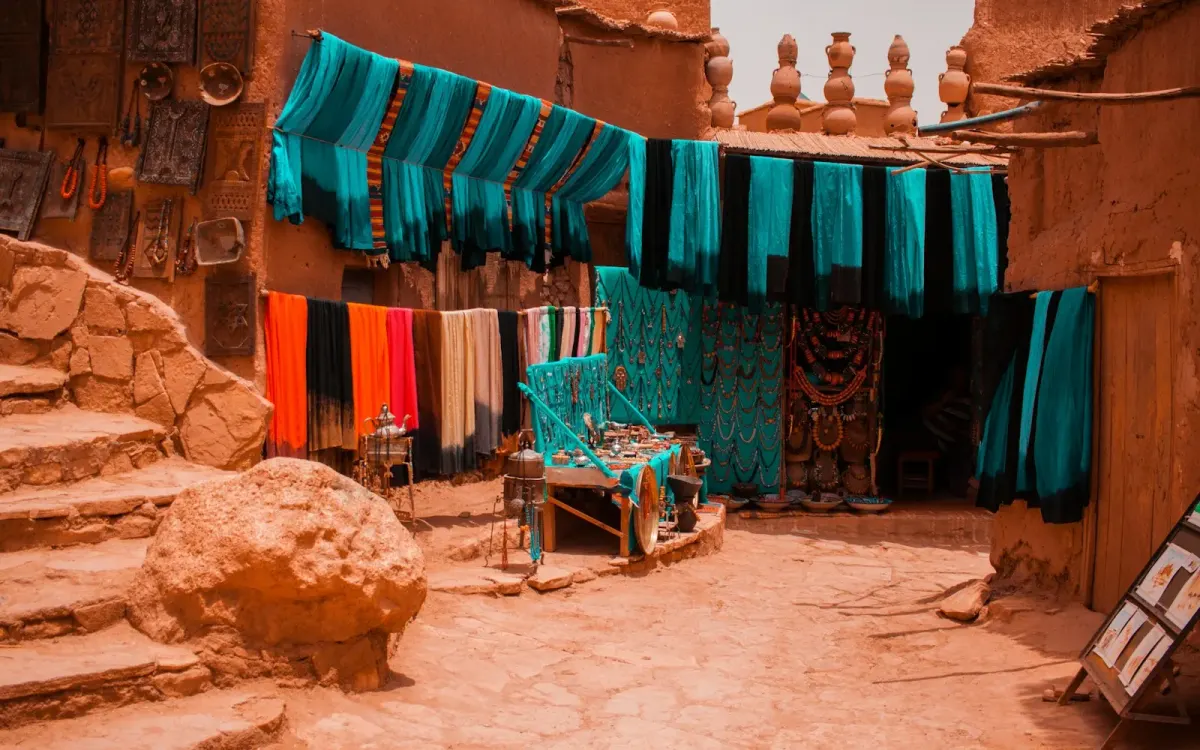
The Marrakech souks fill the medina north of Jemaa el-Fna, with Souk Semmarine as the main artery and specialised souks for leather, metal, carpets, spices and dyers. Shops open around 10:00. Expect to pay roughly 40–60% of the first price after friendly haggling, carry cash, and never feel obliged to buy after tea.
The souks of Marrakech are a sensory overload — and a lot more fun once you understand how they work. Each alley traditionally belongs to one trade, prices are always negotiable, and the best purchases come to those who take their time.
How the souks are organised
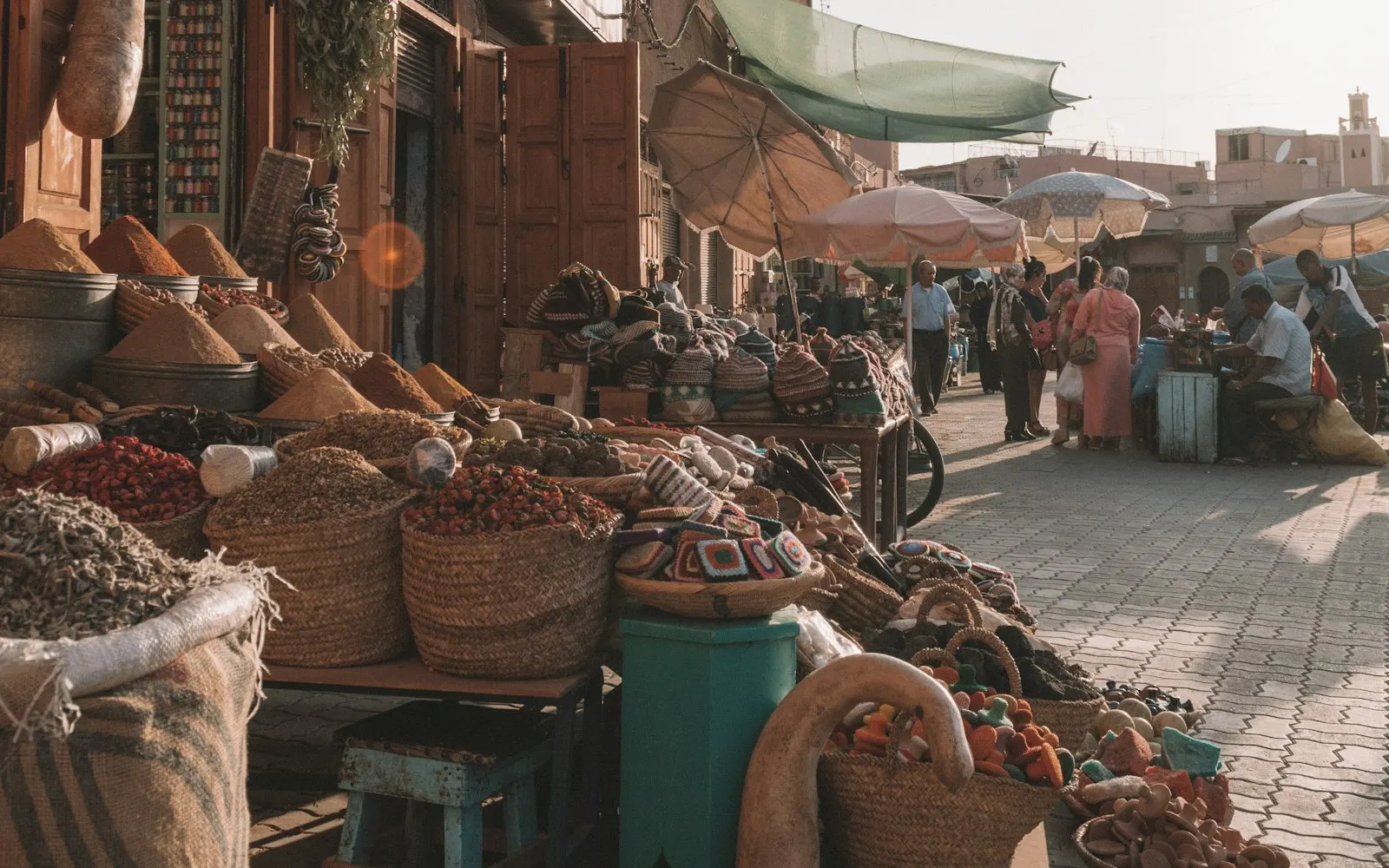
From Jemaa el-Fna, enter through the arch of Souk Semmarine, the main covered street of textiles and souvenirs. It forks into Souk el Kebir and Souk el Attarine, where spices and perfumes used to be sold. Around them:
- Souk Cherratine — leather workers: bags, belts, babouches.
- Souk Haddadine — blacksmiths and lantern makers hammering metal.
- Souk des Teinturiers — the dyers' souk, with skeins of coloured wool hung to dry.
- Rahba Kedima — the spice square, also selling black soap, hats and baskets.
- Criée Berbère — the former slave auction square, now full of carpet shops.
- Souk Smata — babouche slippers in every colour.
Fair prices in 2026 (indicative)
| Item | Typical first price | Fair price after haggling |
|---|---|---|
| Leather babouches | 250 MAD | 120–180 MAD |
| Small metal lantern | 200 MAD | 80–150 MAD |
| Pure argan oil (100 ml, cooperative) | 150 MAD | 100–130 MAD |
| Spices (100 g ras el hanout) | 60 MAD | 25–40 MAD |
| Leather pouf (unstuffed) | 450 MAD | 200–300 MAD |
| Small handmade wool rug | 3,000 MAD | 1,200–2,000 MAD |
Prices depend on quality, size and season. Visit the fixed-price Ensemble Artisanal first to calibrate.
How to haggle (politely)
- Show interest without urgency; ask the price, then think about it.
- Offer around a third to half of the first price with a smile.
- Expect a counter-offer and a story; meet somewhere in the middle.
- Never name a price you are not willing to pay.
- Walking away politely is part of the game — and often brings a better offer.
Accepting mint tea does not oblige you to buy. Be wary of anyone who offers to "show you the way" to a "cooperative" or "Berber market that is only open today": these are commission traps.
Carpets: what to know
Real Amazigh rugs are knotted or woven by hand from wool, often with natural dyes. Check the back for hand-tied knots and irregularities (a sign of handwork), ask where it was made and take photos of the labels. Shipping can be arranged, but get a written receipt with the price and description.
Shop with a local
On our guided medina walking tour, your guide explains each souk and the fair prices, without any compulsory shopping stop. Want more time for shopping? Book the private city tour and tell your guide what you are looking for.
More tips: Marrakech travel tips for first-time visitors and things to do in Marrakech.
FAQ
What time do the Marrakech souks open?
Most shops open around 10:00 and close around 19:00–20:00. Friday around midday is quieter because of prayers.
How much should I offer when haggling?
Start around a third to a half of the first price and meet in the middle. Smile, take your time and walk away politely if the price does not suit you.
What is the best thing to buy in Marrakech?
Handmade rugs, leather goods, lanterns, ceramics, argan oil and spices are the classic buys. Quality varies, so compare shops before buying.
Is there a fixed-price shop?
Yes, the Ensemble Artisanal on Avenue Mohammed V sells crafts at fixed prices — useful to learn what things should cost.

Morocco Travels Team
Written by the Morocco Travels team in Marrakech — local guides and drivers who run these routes every week. We update our guides each season with current prices, opening hours and road conditions.