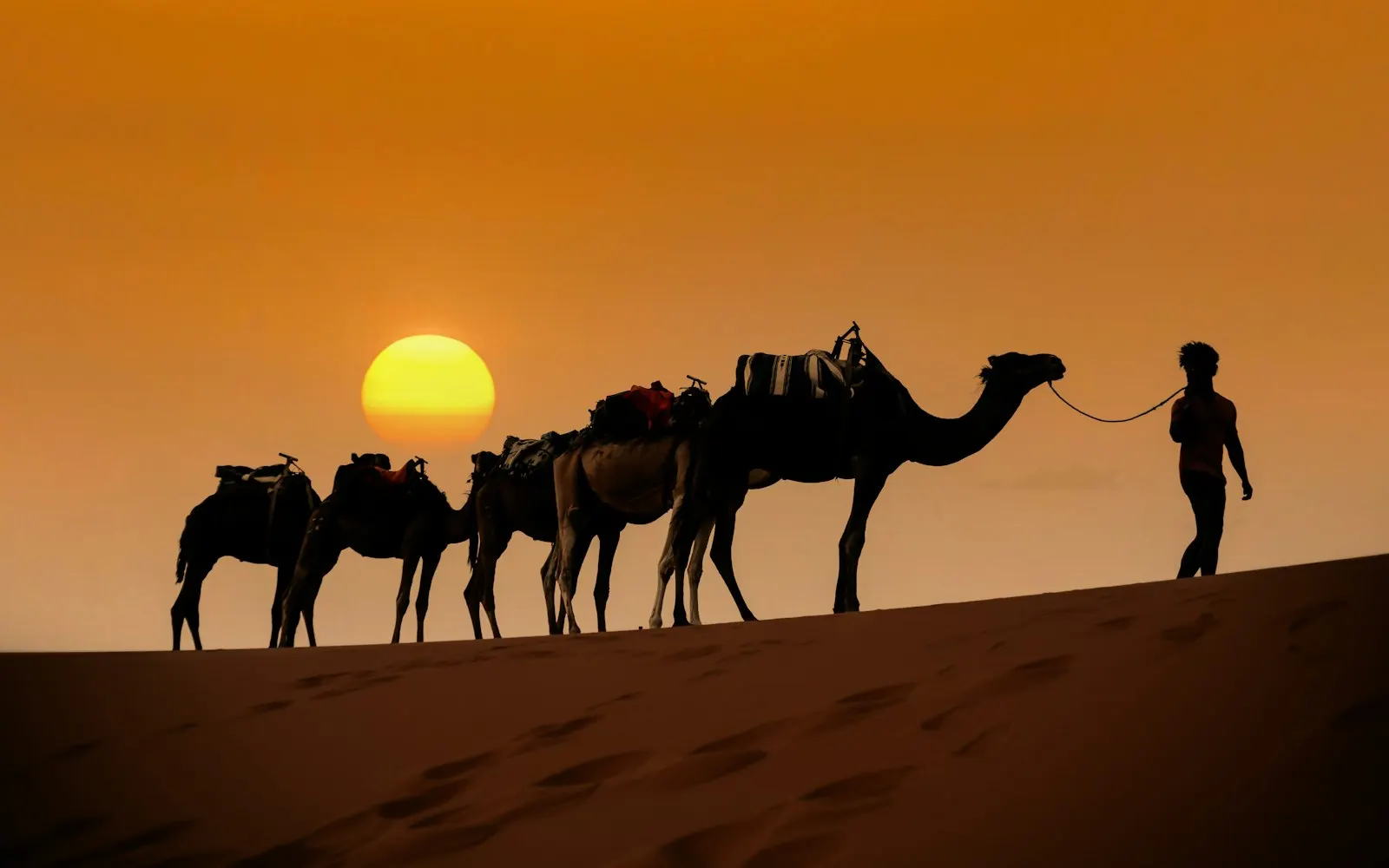
Sleeping under the stars beside the dunes of Erg Chebbi is the experience many people picture when they dream of Morocco. Getting from Marrakech to Merzouga, though, is a serious journey: you cross the High Atlas, pass kasbahs and palm oases, and drive through hundreds of kilometers of pre-Saharan landscape before the first golden dune appears.
Our team runs this route every week, and in this guide we explain everything you need to plan a Sahara desert tour from Marrakech: the route, distances, driving times, how many days you really need, what desert camps are like, and what to pack.
Merzouga is about 560 km from Marrakech, roughly 9–10 hours of driving without stops, via the Tizi n'Tichka pass, Ouarzazate, and the Dades and Todra valleys. Because of the distance, the best option for most travelers is a 3-day tour with two nights (one in the Dades Valley, one in an Erg Chebbi desert camp). A 2-day trip only reaches the smaller dunes near Zagora.
Key takeaways
- Marrakech to Merzouga is roughly 560 km each way and takes around 9–10 hours of pure driving, longer with stops.
- The classic route crosses the High Atlas at Tizi n'Tichka (about 2,260 m) and passes Ait Benhaddou, Ouarzazate, the Dades Gorges, and the Todra Gorge.
- A 3-day tour is the minimum we recommend for Merzouga; a 2-day desert trip goes to Zagora instead.
- The Erg Chebbi dunes rise to around 150 m and are reached by camel or 4x4 from the edge of Merzouga village.
- Spring (March–May) and autumn (late September–November) are the most comfortable seasons; winter nights can be near freezing.
Where Is Merzouga and What Is Erg Chebbi?
Merzouga is a small village in southeastern Morocco, close to the Algerian border, in the Errachidia province. It sits at the western edge of Erg Chebbi, a sea of sand dunes roughly 22 km long and up to about 5–7 km wide. Some dunes reach around 150 meters high, and their orange color shifts through the day, deepest at sunrise and sunset.
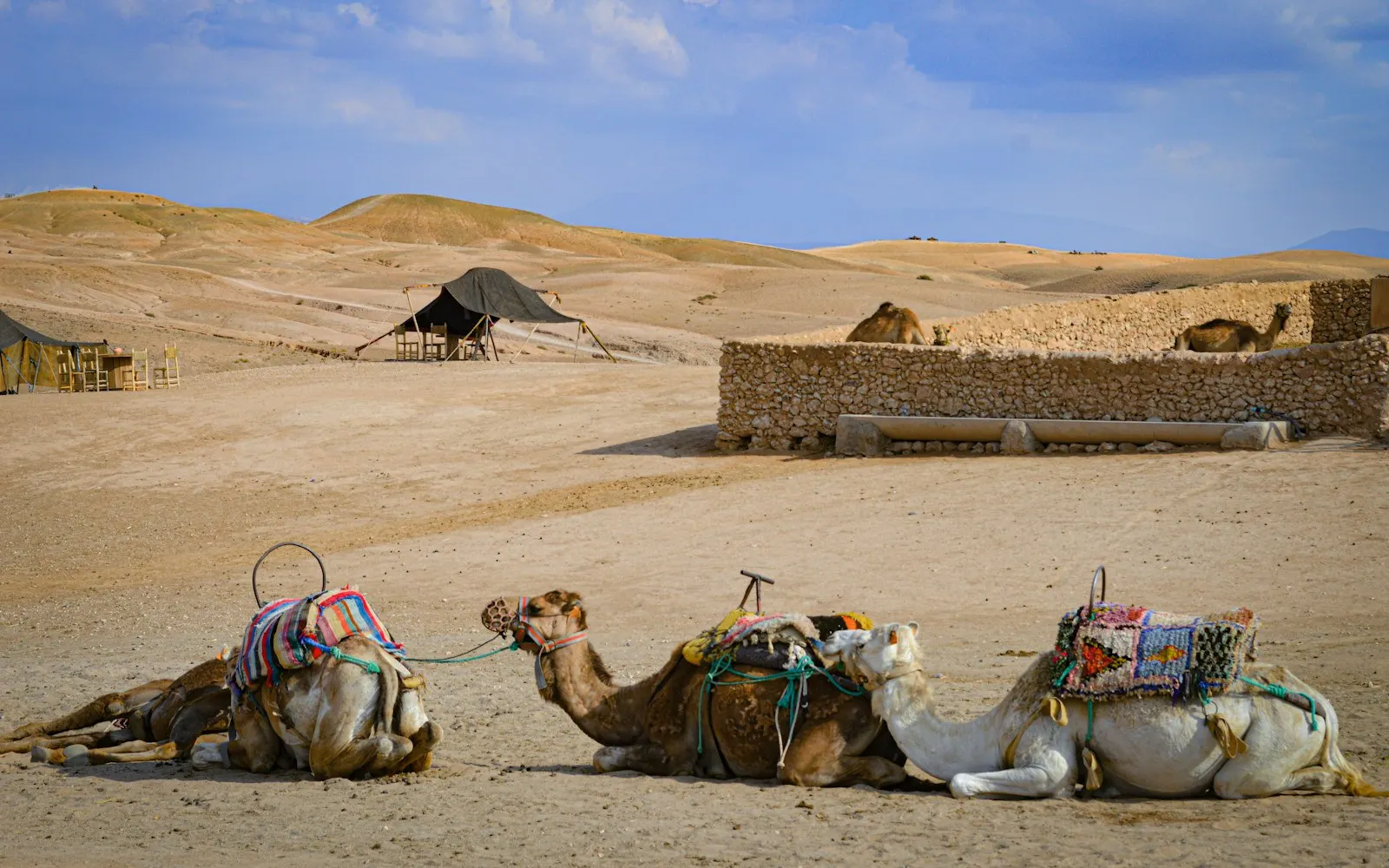
This is the Merzouga desert most travelers mean when they talk about "the Sahara" in Morocco. It is a true erg, a field of wind-blown sand, unlike the stony desert of Agafay near Marrakech. If you are unsure which experience suits you, read our comparison of Agafay vs Merzouga.
The Route from Marrakech to Merzouga
There is one main road route, and it is one of the most scenic drives in North Africa.
Stage 1: Marrakech to Ouarzazate (about 200 km)
You leave Marrakech on the N9 and climb into the High Atlas. The road snakes up to the Tizi n'Tichka pass at around 2,260 meters, the highest major road pass in Morocco. Expect hairpins, Berber villages, and huge views. Most tours stop at Ait Benhaddou, the fortified ksar that is a UNESCO World Heritage site and has appeared in many films and TV series. If you only have one day, our Ait Benhaddou & Ouarzazate day trip (12 hours, from €39) covers this stage.
Stage 2: Ouarzazate to the Dades Valley (about 120 km)
East of Ouarzazate, the road follows the "Road of a Thousand Kasbahs" through the Skoura palm grove and the rose-growing valley around Kelaat M'Gouna. Most 3-day tours spend the first night in a hotel in the Dades Valley or Boumalne Dades.
Stage 3: Dades to Merzouga via Todra Gorge (about 235 km)
On day two, you visit the Todra Gorge near Tinghir, where limestone walls rise around 300 meters above a narrow river. Then the land flattens through Tinejdad, Erfoud, and Rissani, with fossil workshops and date palms, before you reach Merzouga in the afternoon and switch to camels.
Distances and driving times
| Leg | Approx. distance | Approx. driving time |
|---|---|---|
| Marrakech to Ait Benhaddou | 180 km | 3.5–4 h |
| Ait Benhaddou to Ouarzazate | 30 km | 30 min |
| Ouarzazate to Dades Valley | 115 km | 2 h |
| Dades Valley to Todra Gorge | 60 km | 1–1.5 h |
| Todra Gorge to Merzouga | 175 km | 3 h |
| Total Marrakech to Merzouga | ~560 km | ~9–10 h without stops |
Times are approximate and depend on traffic, roadworks, and weather on the Tizi n'Tichka pass, which can occasionally close briefly after heavy snow in winter.
2 vs 3 vs 4 Days: How Long Do You Need?
This is the question we hear most. The honest answer depends on how much driving you can tolerate and how much time you want in the dunes.
| Tour length | Desert reached | Nights | Best for |
|---|---|---|---|
| 2 days | Zagora (smaller dunes) | 1 night in camp | Short trips, tight schedules |
| 3 days | Merzouga / Erg Chebbi | 1 hotel + 1 desert camp | Most travelers |
| 4 days | Merzouga / Erg Chebbi | 1 hotel + 2 desert, or extra gorge stop | Slower pace, photographers |
2 days: Zagora, not Merzouga
A 2-day trip cannot realistically reach Merzouga and return. Instead, it heads to Zagora, about 360 km from Marrakech, where you ride camels into smaller dunes and spend a night in a camp. Our 2-day Zagora desert trip (from €79) is a good choice if you have limited time but still want a night in the desert.
3 days: the classic Marrakech desert tour
The 3-day Marrakech desert tour is the most popular for a reason. Day one is the Atlas and Ait Benhaddou, day two is the Todra Gorge and a sunset camel ride into Erg Chebbi, and day three is sunrise over the dunes and the long drive back. Our 3-day Sahara desert tour to Merzouga (from €145) follows this route with a night in the Dades Valley and a night in a desert camp.
The trade-off is that day three is long, often 9–10 hours on the road. Many travelers sleep through part of it.
4 days: slower, with more time in the dunes
A 4-day tour lets you spend a full day in Merzouga, with time for a 4x4 loop around Erg Chebbi, a visit to Khamlia village for Gnawa music, sandboarding, or simply resting. It also breaks up the driving. If you are planning a longer trip, our 10-day Grand Morocco tour (from €1,190) includes the Sahara at a relaxed pace.
One-way option: Marrakech or Fes
Merzouga is roughly as far from Fes as it is from Marrakech, so many people cross the country through the desert. Our 3-day desert tour from Fes to Marrakech (from €165) saves you from driving the same road twice. Browse all our desert tours and multi-day tours to compare.
What to Expect in a Merzouga Desert Camp
The camel ride
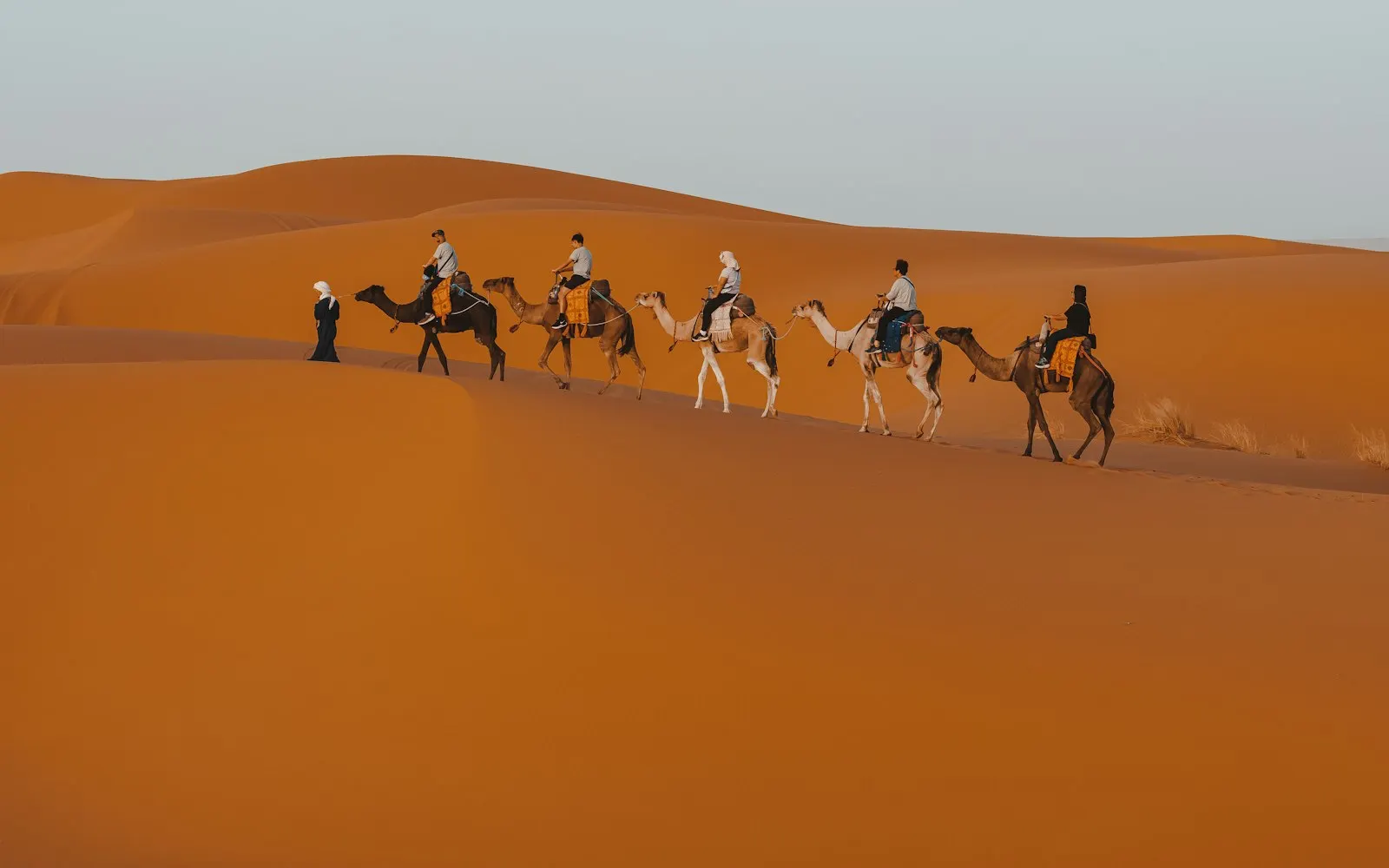
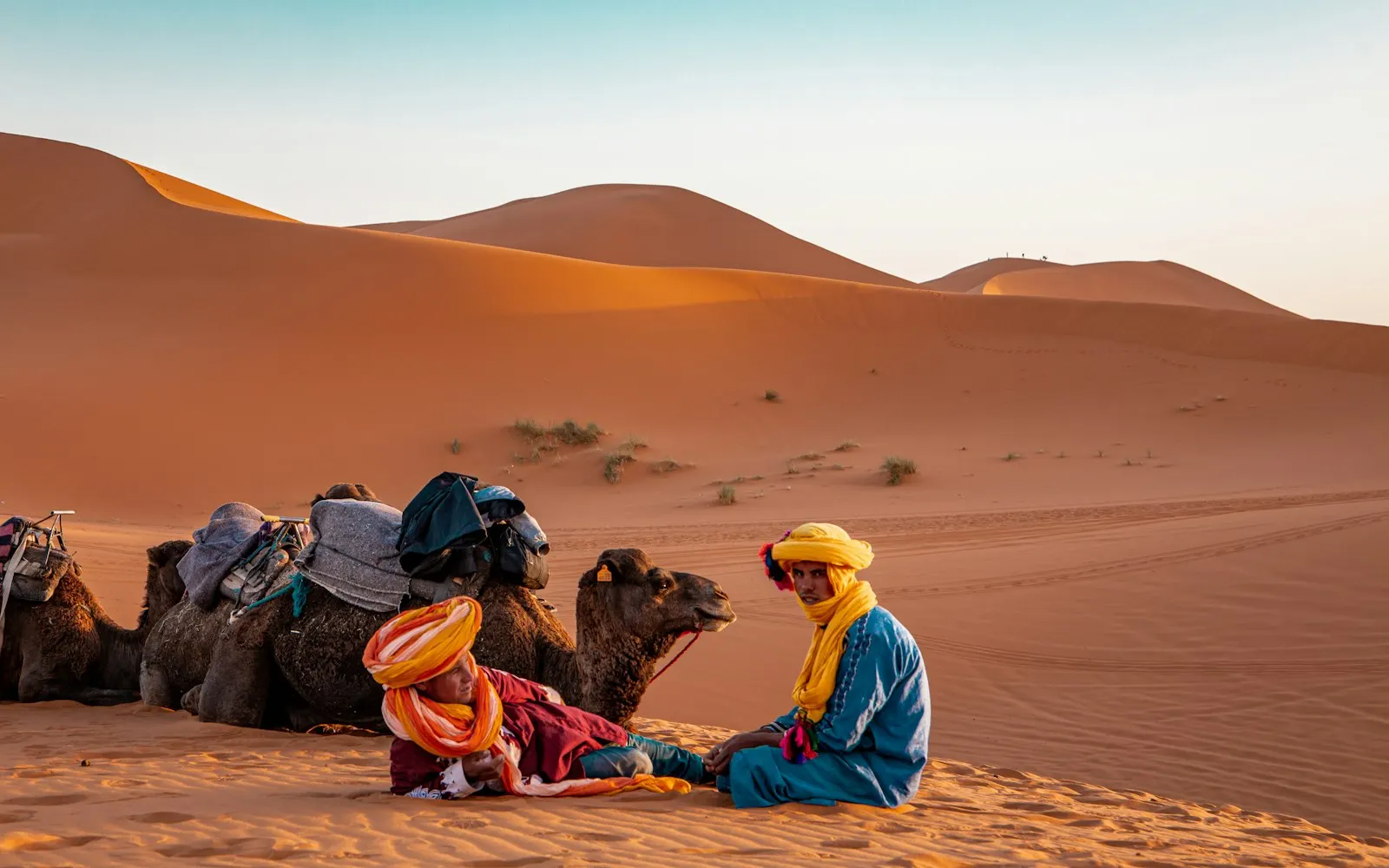
In the late afternoon, you meet the camels at the edge of the dunes. The ride into camp usually takes 1–1.5 hours, timed to reach a high dune at sunset. Camels walk slowly and sway a lot; hold on when they stand and sit, as they lurch forward then back.
Types of camps
- Standard camps: Berber-style tents with beds and blankets, and shared bathrooms.
- Comfort or luxury camps: larger tents with private bathrooms, hot showers, proper mattresses, and sometimes electricity for charging.
Both types serve dinner, typically harira soup or salads, then a tagine or couscous, followed by fruit and mint tea.
Evenings and sunrise
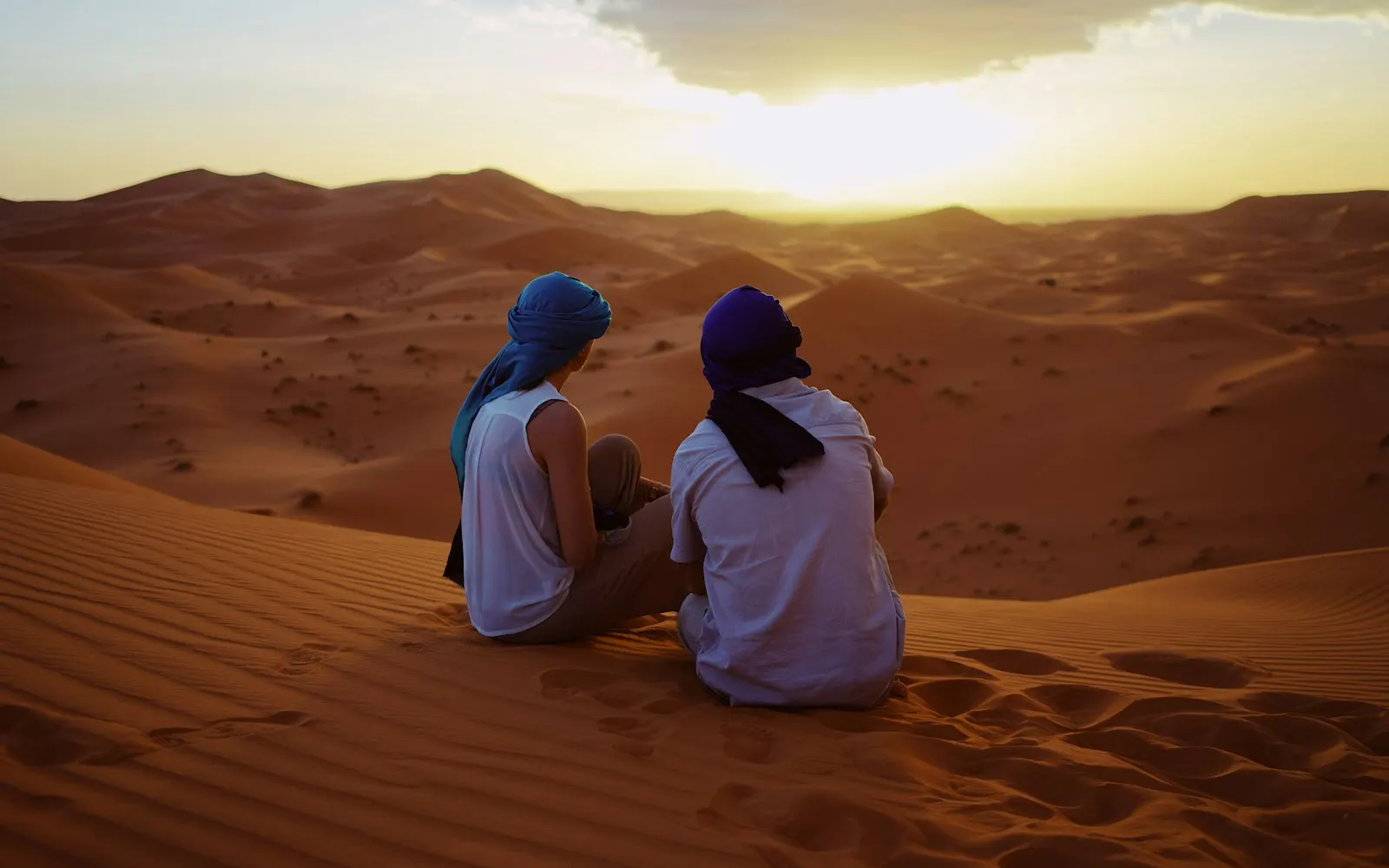
After dinner, the camp team often plays drums around a fire, and on clear nights the Milky Way is spectacular. Wake early for sunrise, then enjoy breakfast and the camel ride back to Merzouga.
Facilities and connectivity
Phone signal is patchy. Power is often limited to certain hours in standard camps, so bring a charged power bank.
Best Time to Visit the Merzouga Desert
| Season | Daytime | Night | Notes |
|---|---|---|---|
| Spring (Mar–May) | Warm, pleasant | Cool | Ideal; occasional sandstorms |
| Summer (Jun–Aug) | Very hot, often 40°C+ | Warm | Possible, but tiring |
| Autumn (Sep–Nov) | Warm | Cool | Ideal; clear skies |
| Winter (Dec–Feb) | Mild, sunny | Near freezing | Bring warm layers; snow possible on the Atlas pass |
For more on seasons across the country, see our best time to visit Marrakech guide.
What to Pack for a Sahara Desert Tour from Marrakech
Pack light: you usually leave your main luggage in the vehicle and take a small bag to camp.
- Layers: a warm jacket or fleece for nights, even in spring and autumn.
- Scarf or cheche: protects against sun and blowing sand. You can buy one in Merzouga.
- Sun protection: sunglasses, sunscreen, and a hat.
- Closed shoes or sandals: sand gets hot; sandals are easiest on the dunes.
- Power bank and headlamp: for limited electricity and nighttime walks.
- Wet wipes, tissues, and a small toiletry kit.
- Cash: for drinks, tips, souvenirs, and optional activities.
- Comfortable clothes for long drives, and motion sickness tablets if you need them for mountain roads.
Our what to wear in Morocco guide has more clothing advice.
Driving Yourself vs Joining a Tour
You can drive to Merzouga in a rental car. The roads are paved and mostly good, but the Tizi n'Tichka section demands care, and you must arrange camels and a camp yourself. A guided tour handles the logistics, with a driver who knows the road and pre-arranged hotels and camps. Public buses also run to Merzouga, but they are slower.
Tips for a Smoother Journey
- Stay hydrated: carry at least 1.5 liters of water per day.
- Respect local culture: ask before photographing people, especially in villages.
- Expect basic roadside stops: restaurants are simple, and many have squat toilets.
- Tell us about dietary needs in advance so camps can prepare vegetarian or allergy-friendly meals.
Conclusion
The journey from Marrakech to Merzouga is long, but it is part of the magic. Crossing the High Atlas, walking through Ait Benhaddou, and arriving in the dunes of Erg Chebbi at sunset is one of the best travel experiences in Morocco. For most travelers, three days is the right balance; with more time, four days lets you truly slow down.
Ready to see the Sahara? Message our team on WhatsApp at +212 606 957 514 to book your desert tour. Hotel pickup in Marrakech is included, you pay on the day, and cancellation is free.