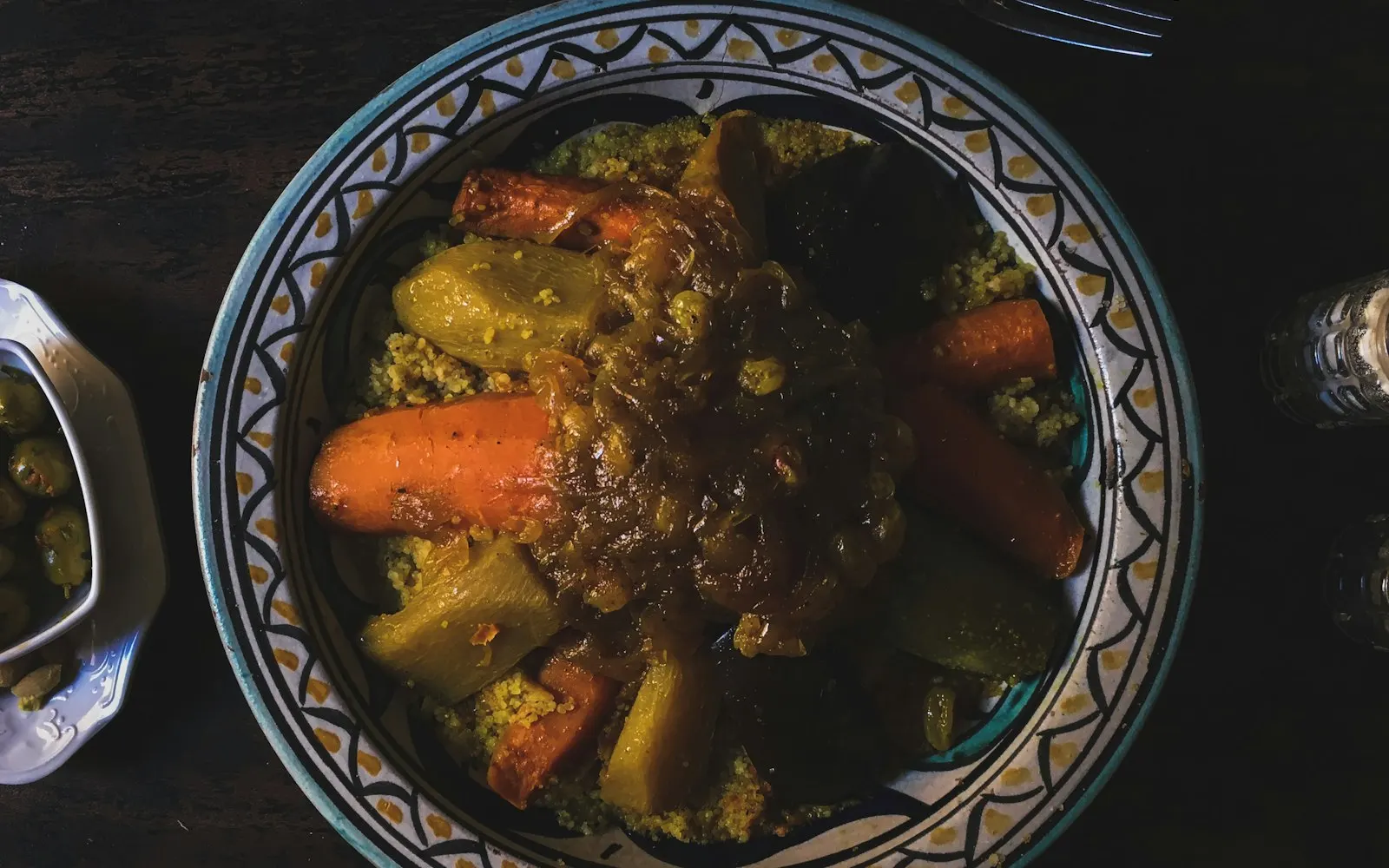
Moroccan food is one of the best reasons to visit Marrakech. It blends Berber, Arab, Andalusian and French influences into slow-cooked stews, flaky pastries, fragrant soups and some of the best bread you will ever eat. Spices are used for depth rather than heat, so most dishes are aromatic, not fiery.
Our guides eat their way through the medina every week, and this is the list we give friends who ask what to eat in Marrakech. You will find 20 traditional Moroccan dishes, how street food works, simple etiquette, where to eat, and tips for vegetarians. If you want to taste it all with a local, our night street food tour is the easiest way to start.
The essential Moroccan foods to try in Marrakech are tagine, couscous (traditionally on Fridays), tanjia (the city's signature slow-cooked meat), pastilla, harira soup, msemen and mint tea. For Marrakech street food, head to Jemaa el-Fna in the evening for grilled meats, snail soup and sheep's head, or to the Mechoui Alley near the square for slow-roasted lamb. Most dishes cost from roughly 20 to 100 MAD in local spots.
Key takeaways
- Tagine and couscous are the national staples; tanjia is Marrakech's signature dish.
- Couscous is traditionally a Friday lunch, so it is easiest to find that day in local homes and cafés.
- Eat with your right hand and use bread as your utensil in traditional settings.
- Busy stalls with high turnover are your best bet for fresh, safe street food.
- Vegetarians eat well: vegetable tagines, lentils, bissara, salads and breads are everywhere.
What Makes Moroccan Food Unique?
Traditional Moroccan dishes are built on a few pillars: slow cooking, sweet-savory combinations, and a spice cupboard that includes cumin, ginger, turmeric, paprika, cinnamon, saffron and the house blend ras el hanout. Preserved lemons, olives, dried fruit and almonds add character.
Meals are social. Food arrives in shared dishes in the middle of the table, bread is served with everything, and mint tea follows almost every meal. Hospitality is central, so if you are invited to a Moroccan home, expect to be fed generously.
20 Traditional Moroccan Dishes to Try
Mains and slow-cooked classics
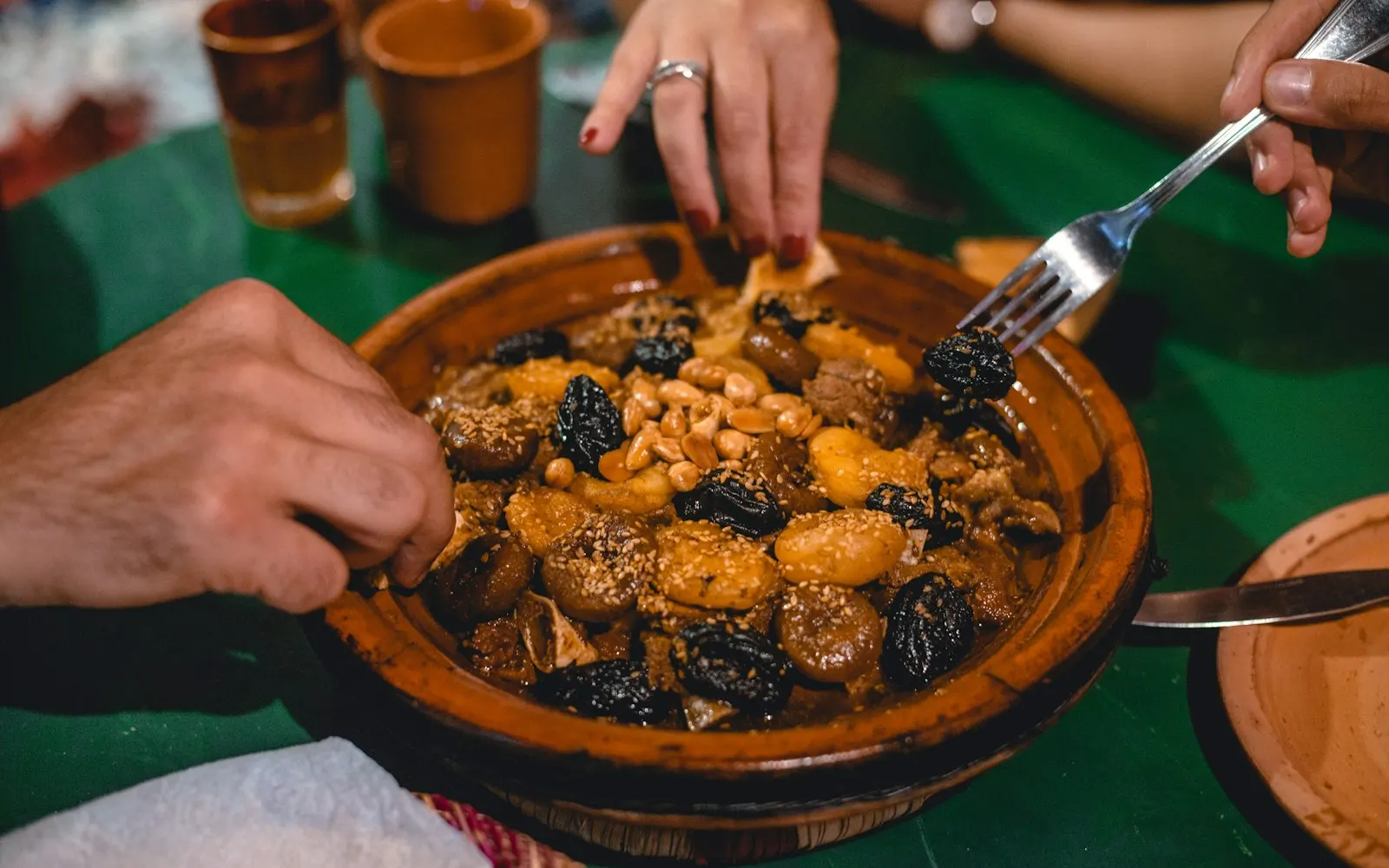
1. Tagine. Named after the conical clay pot it cooks in, tagine is a slow-simmered stew of meat, poultry, fish or vegetables. Classic versions include chicken with preserved lemon and olives, lamb with prunes and almonds, and kefta (meatballs) with eggs.
2. Couscous. Steamed semolina served under a mound of vegetables and meat with a light broth. Families traditionally eat it at Friday lunch after midday prayers. Look for couscous tfaya, topped with caramelized onions and raisins.
3. Tanjia. The dish Marrakech claims as its own. Beef or lamb is packed into a tall clay urn with preserved lemon, garlic, cumin and saffron, then slow-cooked for hours in the ashes of a hammam furnace. The result is meltingly tender.
4. Mechoui. Whole lamb slow-roasted in an underground pit until the meat falls off the bone. It is served simply with salt and cumin for dipping.
5. Pastilla. A flaky pastry pie made with warqa sheets, traditionally filled with pigeon or chicken, almonds, eggs and spices, then dusted with cinnamon and powdered sugar. A seafood version is popular too.
6. Rfissa. Shredded msemen or trid bread soaked in a chicken, lentil and fenugreek broth. It is a comfort dish often served to celebrate a new baby.
7. Kefta. Spiced minced beef or lamb, grilled on skewers or simmered in a tomato tagine with eggs on top.
8. Fish chermoula. Fish marinated in chermoula, a herb-and-spice paste of coriander, parsley, garlic, cumin and paprika, then baked or grilled. It is a favorite on the coast, so save it for an Essaouira day trip.
Soups and starters
9. Harira. A rich tomato, lentil and chickpea soup with herbs and sometimes a little meat. It is the dish that breaks the fast during Ramadan, usually alongside dates and chebakia.
10. Bissara. A thick, velvety split pea or fava bean soup drizzled with olive oil and cumin. It is cheap, filling and a popular winter breakfast.
11. Moroccan salads. Cooked salads such as zaalouk (smoky eggplant and tomato) and taktouka (peppers and tomato) are served as small plates before the main course.
12. Babbouche (snail soup). Snails simmered in a broth with more than a dozen herbs and spices. You will find steaming carts of it at Jemaa el-Fna in the evening.
Breads and breakfast
13. Msemen. Square, flaky pan-fried pancakes, eaten plain, with honey, or stuffed with onions and spices.
14. Baghrir. Spongy "thousand-hole" semolina pancakes, delicious with butter and honey.
15. Khobz. The round everyday bread baked in communal neighborhood ovens. It accompanies every meal.
16. Amlou. A spread made from argan oil, almonds and honey. Try it with bread at breakfast.
Sweets and drinks
17. Chebakia. Flower-shaped sesame cookies fried and soaked in honey, especially popular during Ramadan.
18. Gazelle horns (kaab el ghazal). Crescent pastries filled with almond paste and orange blossom water.
19. Sfenj. Moroccan doughnuts, fried fresh in the morning and often threaded on a palm frond.
20. Mint tea. Green tea brewed with fresh mint and plenty of sugar, poured from a height to create foam. It is a symbol of hospitality and arrives everywhere, from carpet shops to riad terraces.
Quick Reference: What to Eat and Where
| Dish | Type | Best time | Typical place | Rough price |
|---|---|---|---|---|
| Tagine | Main | Lunch or dinner | Any restaurant or café | 50 to 120 MAD |
| Couscous | Main | Friday lunch | Local cafés, family homes | 50 to 100 MAD |
| Tanjia | Main | Lunch | Mechoui Alley, medina snack bars | Priced by weight |
| Mechoui | Main | Late morning to lunch | Mechoui Alley near Jemaa el-Fna | Priced by weight |
| Harira | Soup | Evening, Ramadan | Street stalls, cafés | 5 to 15 MAD |
| Msemen | Breakfast | Morning | Street carts, cafés | 3 to 10 MAD |
| Babbouche | Street food | Evening | Jemaa el-Fna carts | 5 to 10 MAD |
| Mint tea | Drink | All day | Everywhere | 10 to 30 MAD |
Prices are approximate and vary by location and season; tourist-facing restaurants charge more.
Marrakech Street Food: Where and What
Jemaa el-Fna food stalls
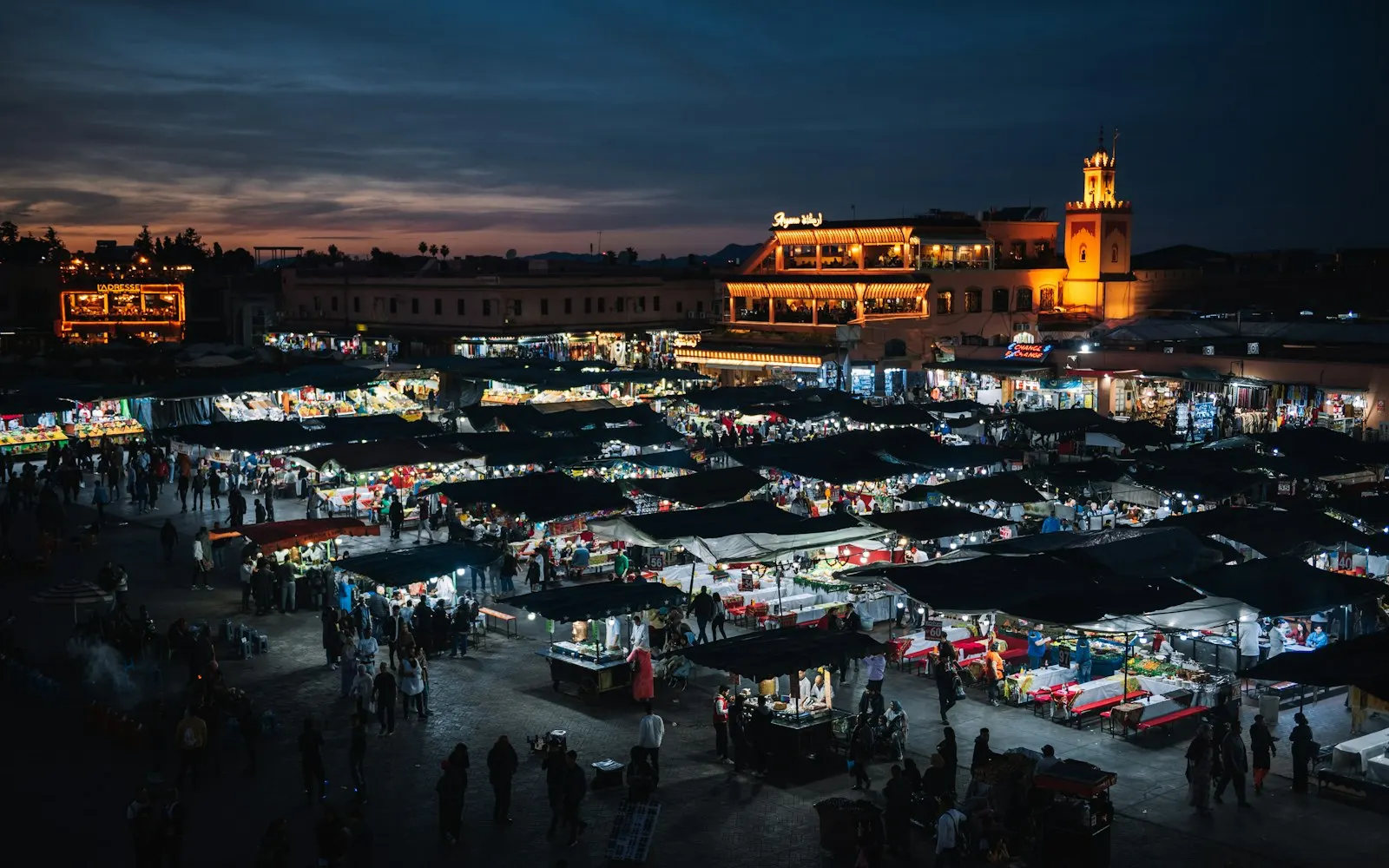
Every evening, the main square transforms into a huge open-air kitchen. Numbered stalls serve grilled brochettes, merguez sausages, fried fish, sheep's head, harira and snail soup. It is noisy, smoky and unforgettable. Read our Jemaa el-Fna guide for the full picture.
Mechoui Alley
Just off the northeast corner of the square, a short lane of stalls sells mechoui and tanjia by weight. Go around lunchtime when the lamb is freshest.
Medina snack bars and bakeries
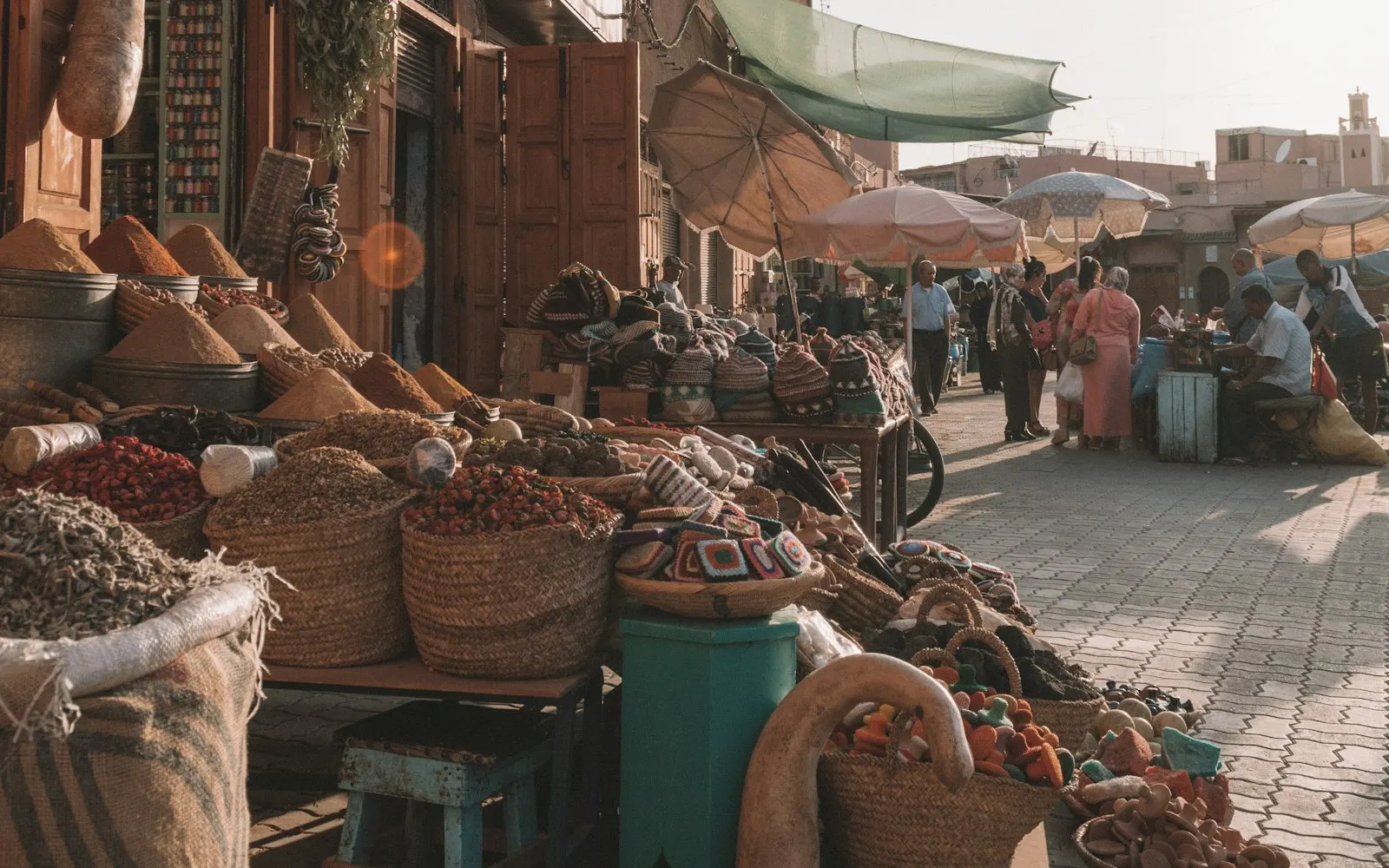
Small hole-in-the-wall shops sell sandwiches, msemen, sfenj and pastries. Follow the locals and the queues.
Street Food Etiquette and Safety Tips
- Choose busy stalls. High turnover means fresh food.
- Check prices first. At Jemaa el-Fna, confirm the price of each item before you sit, and check the bill. Bread and olives that appear on the table may be charged.
- Expect touts. Stall workers will call you over enthusiastically. A polite "la, shukran" (no, thank you) works.
- Use your right hand. In traditional settings, eat and pass food with your right hand, and use bread to scoop.
- Water: Most visitors stick to bottled water and skip ice in small stalls.
- Hand gel: Bring sanitizer; not every stall has a sink.
For broader tips, see our guide for first-time visitors to Marrakech.
Where to Eat in Marrakech
- Riad restaurants: Many riads serve multi-course dinners with salads, tagine and dessert in a beautiful courtyard. Book ahead.
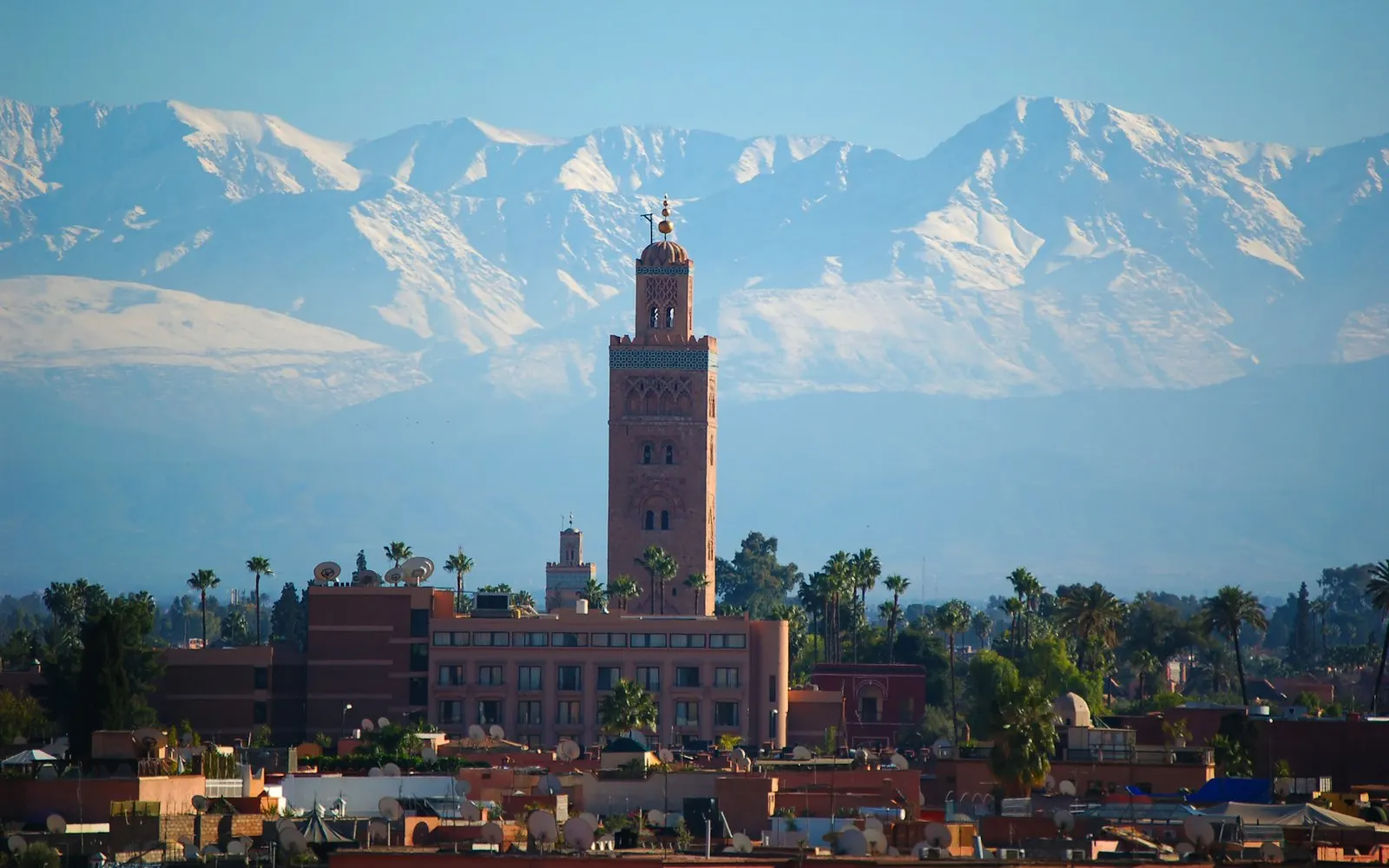
- Rooftop terraces: Around Jemaa el-Fna and the souks, rooftops offer views of the Koutoubia and sunset.
- Local cafés: Away from the main squares, small cafés offer authentic dishes at lower prices.
- Gueliz and Hivernage: The new town has international cuisine, modern Moroccan restaurants and cafés.
To learn to cook these dishes yourself, join our cooking class with market visit, where you shop for ingredients in the souk and prepare a full meal.
Vegetarian and Vegan Food in Morocco
Vegetarians eat well in Marrakech, although meat is central to many dishes and broths may contain stock.
- Safe bets: vegetable tagine, vegetable couscous, zaalouk, taktouka, lentil stews, bissara, msemen, khobz and fresh fruit.
- Useful phrase: "Ana nabati" (I am vegetarian), or simply "bla lham" (without meat).
- Ask about stock: Harira and some couscous broths are made with meat; ask if you are strict.
- Vegans: Watch for butter (smen) and honey; many salads and lentil dishes are naturally vegan.
Dining Customs and Ramadan
Lunch is often the main meal, typically from about 13:00, and dinner is served late, around 20:00 or later. Tipping around 10% is appreciated in sit-down restaurants.
During Ramadan, many local cafés close during the day, while tourist restaurants and hotels stay open. At sunset, the city comes alive with ftour, the meal that breaks the fast with harira, dates, eggs and sweets. Eating discreetly in public during daylight is respectful.
Alcohol is available in licensed hotels, bars and some restaurants, but not in most traditional places or street stalls.
Conclusion
Moroccan food is generous, aromatic and deeply tied to family and hospitality. From a bubbling tagine to tanjia straight from the hammam ashes and a glass of sweet mint tea, Marrakech offers an incredible range of flavors at every budget.
If you want to taste the best of Marrakech street food without the guesswork, join our local guides for an evening of tasting through the medina. Message our team on WhatsApp to book; you pay on the day, and cancellation is free.