Marrakech Guide · 3 min read
Bahia Palace Marrakech Guide 2026: History, Tickets, Hours and Tips
Quick answer
The Bahia Palace is a late-19th-century vizier's palace in the Marrakech medina, famous for painted cedar ceilings, zellige tilework and garden courtyards. It opens daily around 9:00–17:00, entry costs about 100 MAD, and a visit takes 45–60 minutes. Go at opening time to avoid tour groups.
"Bahia" means brilliance, and the name fits. Behind plain walls on the edge of the Mellah, the Bahia Palace hides a succession of courtyards, salons and gardens decorated by the best craftsmen of 19th-century Morocco.
Who built the Bahia Palace?
Construction began in the 1860s under Si Moussa, grand vizier of Sultan Mohammed IV, and was greatly expanded in the 1890s by his son Ba Ahmed, who was effectively the most powerful man in Morocco as regent and vizier of the young Sultan Abdelaziz. Ba Ahmed wanted the finest palace of his age, and craftsmen from Fes worked on it for years. After his death in 1900 the palace was emptied; later it served as the residence of the French Resident-General during the Protectorate.
What to see
- The small riad and salons: intricate carved stucco, painted wooden ceilings and stained glass.
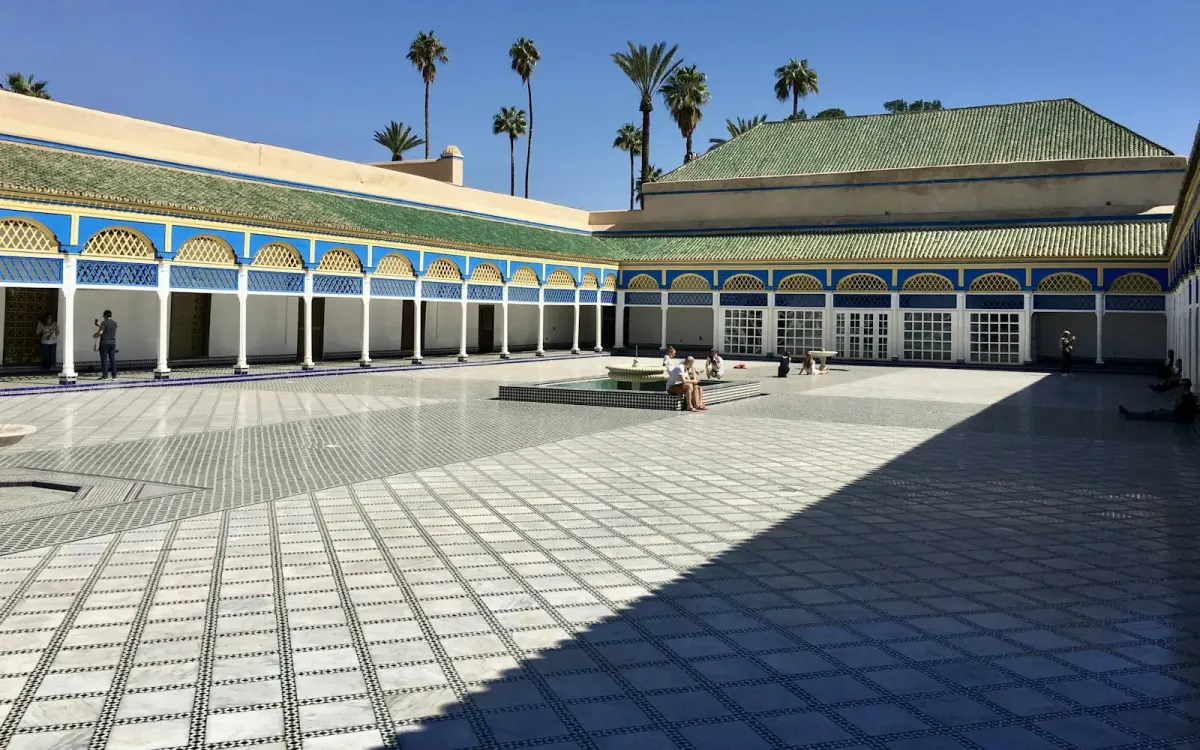
- The grand courtyard: a vast marble-paved space edged with zellige and wooden galleries — the iconic photo.
- The harem quarters: rooms around courtyards with orange trees and fountains.
- The gardens: banana, orange and jasmine planted around paths and pools.
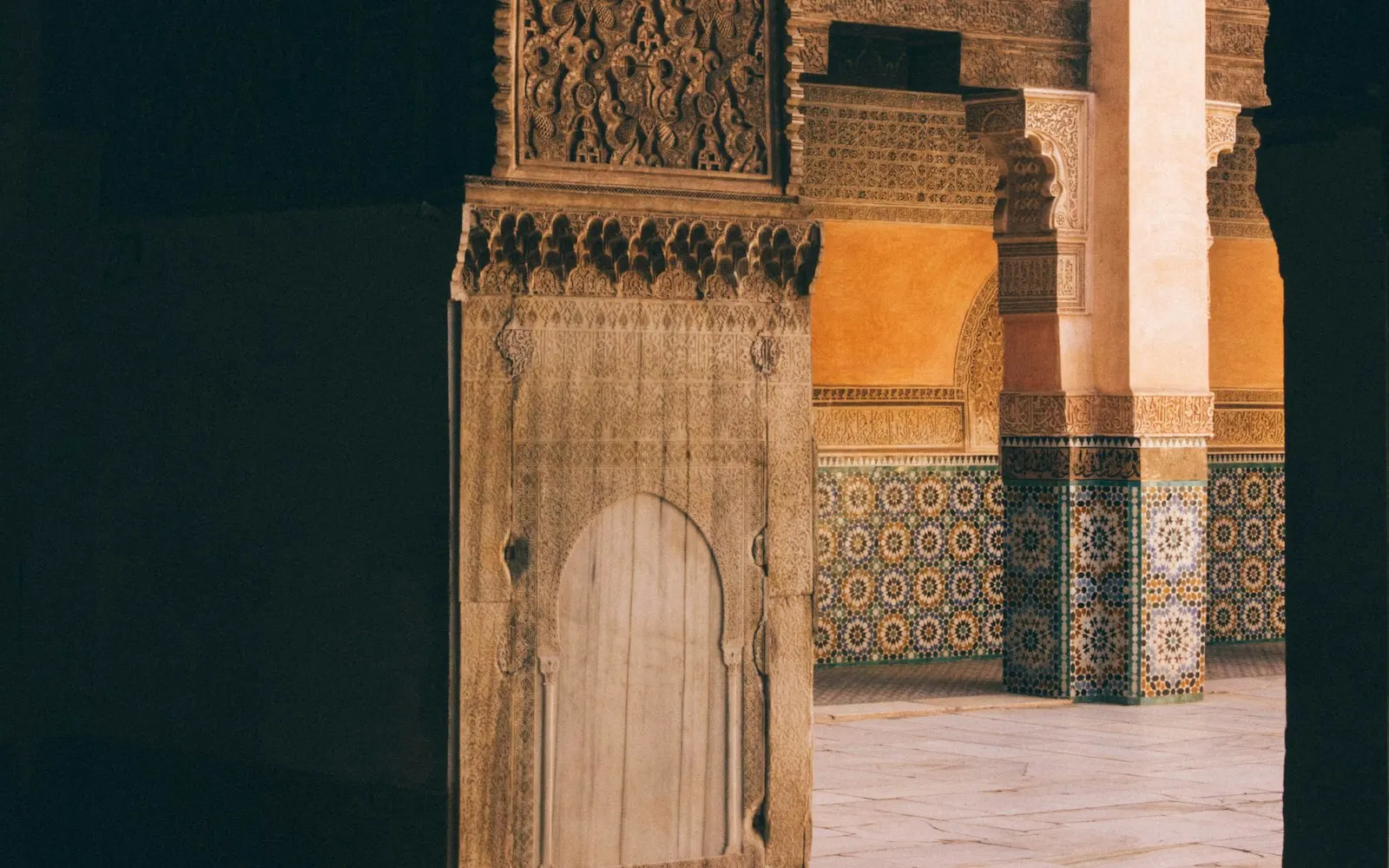
Look up: the painted cedar ceilings are the palace's masterpiece, each room with a different geometric and floral pattern. Look down: the zellige floors and walls use thousands of hand-cut tiles.
Tickets, hours and timing
The palace typically opens daily from about 9:00 to 17:00 and entry costs around 100 MAD. Visiting takes 45–60 minutes. By 10:30 large tour groups arrive, so come at opening time or after 15:30.
How to combine it
Bahia Palace sits next to the Mellah, the old Jewish quarter with its spice market, and a 10-minute walk from the El Badi Palace and the Saadian Tombs. Our medina guided walking tour starts here, and the private city tour combines it with Majorelle and the Koutoubia by car.
Photography tips
Wide-angle lenses help in the courtyards; midday light is harsh, so prefer morning. Tripods are generally not welcome. Be patient in the grand courtyard — groups move on every few minutes.
Bahia Palace quick facts (2026)
| Item | Details |
|---|---|
| Ticket / Eintritt / Entrée | About 100 MAD for foreign adults; reduced rates for children and Moroccan residents |
| Opening hours | Daily about 9:00–17:00, last entry around 16:30 (shorter hours during Ramadan) |
| Visit length | 45–75 minutes on your own, add 30–45 minutes with a guide |
| Location | Riad Zitoun el-Jedid, on the edge of the Mellah, 10 minutes' walk from Jemaa el-Fna |
| Payment | Cash in dirhams at the ticket office |
A short history of the Bahia Palace
The palace was built in two phases. Si Moussa, a former slave who rose to grand vizier, began the first residence in the 1860s. His son Ba Ahmed ben Moussa — chamberlain, then grand vizier and regent for the teenage Sultan Abdelaziz — expanded it massively between about 1894 and 1900, buying neighbouring houses and bringing craftsmen from Fes and other cities. The result is a sprawling complex of courtyards, gardens and salons, only part of which is open to visitors.
When Ba Ahmed died in 1900 the sultan's court stripped the palace of its furniture. Under the French Protectorate (from 1912) the Resident-General Lyautey lived here, which is one reason the building survived in such good condition. Today it belongs to the Moroccan state and is open to visitors as a historic monument.
A simple route through the palace
- The entrance garden with its long path and orange trees.
- The small riad (Si Moussa's original house): carved stucco, painted cedar doors and a quiet garden.
- The salons of Ba Ahmed: look up at the painted ceilings, each with a different pattern.
- The grand courtyard, a huge space paved in marble with zellige borders and wooden galleries — the photo everyone wants.
- The harem and the favourite's apartments, the most richly decorated rooms, with stained-glass windows.
Follow the arrows; the route is one-way at busy times.
Is the Bahia Palace worth it?
Yes, if you like architecture and craftsmanship: it is the clearest single example of 19th-century Moroccan decoration in Marrakech. If you only have one morning, pair it with the El Badi Palace ruins nearby for contrast — read our Saadian Tombs and El Badi Palace guide. If palaces are not your thing, the Majorelle Garden may suit you better.
For more sights, see things to do in Marrakech and the Majorelle Garden guide.
FAQ
How much does the Bahia Palace cost?
Entry costs about 100 MAD for adults in 2026. Prices can change, so carry cash in dirhams for the ticket office.
What are the Bahia Palace opening hours?
It usually opens every day from about 9:00 to 17:00. Arrive at opening time to enjoy the courtyards before the groups.
Is the Bahia Palace worth visiting?
Yes. It is the best place in Marrakech to see Moroccan craftsmanship of the 19th century in one visit, and it is close to the Mellah and the El Badi Palace.
Do I need a guide for the Bahia Palace?
It is not required, but there is little signage. A guide explains the stories of the viziers and the meaning of the decoration.
How long do you need at the Bahia Palace?
Most visitors spend 45 to 75 minutes. With a guide who explains the history and decoration, allow about 1 h 30.
Where is the Bahia Palace?
On Riad Zitoun el-Jedid street, next to the Mellah, about 10 minutes on foot from Jemaa el-Fna. Taxis can drop you at the nearby square.

Morocco Travels Team
Written by the Morocco Travels team in Marrakech — local guides and drivers who run these routes every week. We update our guides each season with current prices, opening hours and road conditions.